In Mongolian culture, there are several colors that hold symbolic significance, namely white, red, blue, yellow, green, and black. The “best” color is white and it is used to symbolize goodness, holiness, and positivity. This is why milk tea and other “white foods” (i.e. dairy products) are seen as especially good. I’m sure this has nothing to do with the traditional pastoral lifestyle. 😉 In conjunction with this idea, more traditional Mongolians* view water as “black” (a negative association like mourning**) and would be offended to be offered water instead of milk tea.
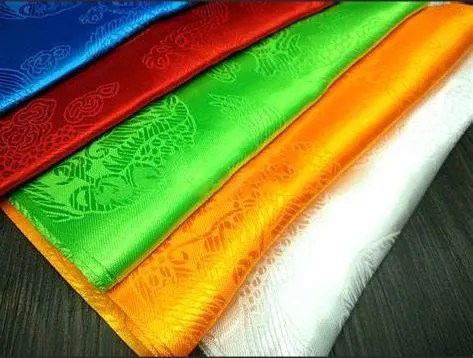
The colors green and blue are representative of the natural world. Green represents all things growing and would be associated with Earth. Blue represents the sky, eternality, and so on. Red represents fire, strength, bravery, and love. Yellow represents education, enlightenment, joy, etc.
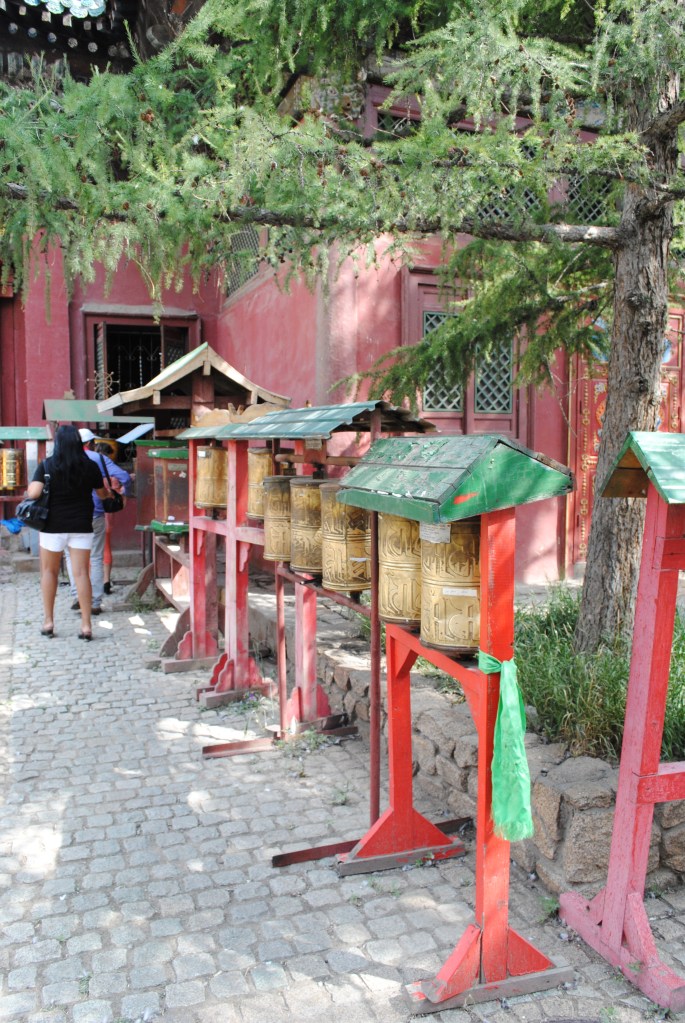



There is a lot of overlap between traditional Mongolian culture and its use of these colors and Buddhism, which also uses these colors and some of their symbolism. The colorful scarves pictured in this post can often be seen tied around things in the city and countryside–trees, bridges, fences, rearview mirrors in cars, light fixtures in homes–and are used in religious ritual as part of a prayer or as a type of talisman. If you go to any religious site, whether it be a Buddhist temple or a Tengerist location, you will see scarves in various colors tied or tucked into nooks and crannies there. People will also present scarves to people they respect, such as elders at holiday gatherings like Tsagaan Sar or even teachers/professors at graduation. The scarf color will relate to the event at which it is presented.
*This is more likely to be a consideration in the countryside or with older generations. In Ulaanbaatar, you are unlikely to encounter this particular idea.
**Black items are rarely gifted due to this negative association, but if you must give a black item, place a white item on top first and give both. It sort of cancels out the bad luck.

